Games to enhance and nurture a Border Collie's natural instincts
The Border Collie is wired to control movement — and when that instinct is starved, it comes out as car-chasing, ankle-nipping and shredded cushions, and too often ends in a rescue kennel.
The Border Collie is an exceptional herding dog. It thrives on controlling movement and creating order in its surroundings. It has the skill, focus and self-discipline to understand and act on its handler's instructions. If compared to a car, it would be the Lancia Stratos — a car purpose-built from the chassis up for rallying. A Ferrari Dino engine placed in the middle, and an aerodynamic shape to withstand all terrains and turns at high speeds. Perfect acceleration and deceleration at control. Beauty in its erratic yet perfectly controlled movement. Not a car you would take the kids to school in — a car that needs to be excelling in its perfect environment.
The closer the breeding to the ISDS (International Sheep Dog Society) standard, the stronger the drive to herd. Non-ISDS-bred Border Collies may also have a high herding instinct, and this trait needs to be recognised.
Too many times Border Collies are purchased for the wrong reasons, and they end up becoming problems for their owners through this strong instinct and drive.
Some are purchased with the idea that the more intelligent the breed, the easier it is to live with. People marvel at the displays of agility shown at Crufts and the ability to fetch sheep from fields away by only a whistle. There is so much more to it. With great intelligence comes great drive. The more intelligence, the more the need to learn and act. The less there is to learn and do, the more the less desirable behaviours will appear. The more the less desirable behaviours become normal and self-rewarding, the harder they are to stop.
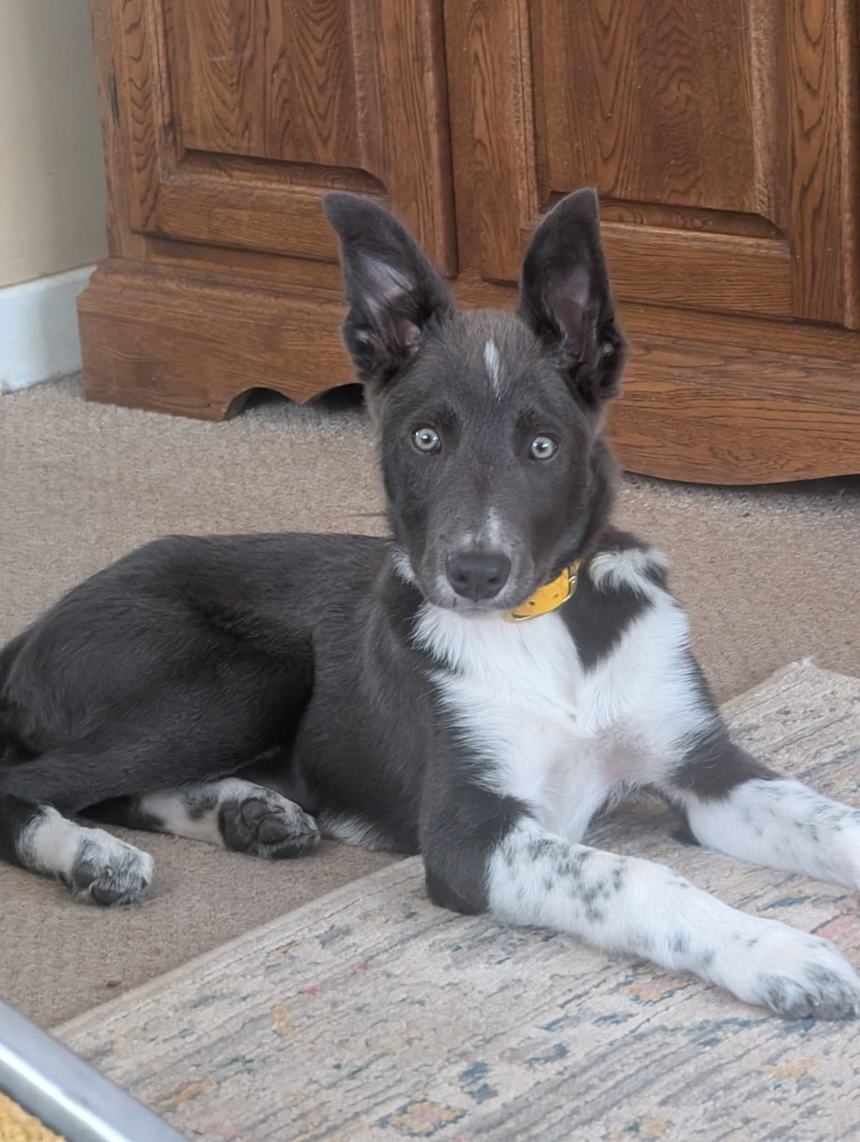
In my many decades of owning and working these amazing dogs, I have come across so many "de-collied" Borders.
I have heard many reasons and excuses why these dogs have ended up either in rescue centres or "broken" into submission.
There is nothing that tugs my heart strings more than a collie who has lost his sense of being and purpose. I think of them as being dead behind the eyes, bereft of a purpose in life and wrongly accepting of a life filled with very little stimulation and joy.
"He's a lovely dog, but!"
The conversations generally start the same.
He/she is a lovely dog, but!
- They chase the kids
- They chase cars
- They nip at my ankles
- They destroy the house
- They chase a ball until they collapse but then won't bring it back to go home
My reply? Yes! It's a working machine — what did you expect?
Usually this occurs once the puppy stage is over, at around 6 to 8 months of age. So often these young dogs will then end up in rescue centres (which can destroy their souls even more), or they are limited to a life of being kept in one room away from the family and lead-walked only — or, worse still, they shut down and accept that life is unfulfilled and miserable.
So why do these habits occur?
A working Border Collie's brain is wired to control. Control movement, and control situations. To them, the world should have order, and everything should be in its place.
Herding sheep involves moving them as a single unit to the place the farmer dictates. The sheep should move smoothly, as one, and then stop where required.
Erratic movement is not allowed, and the desire to control any movement can become an obsession.
Therefore, being walked along roadsides where cars whizz past can be very distracting if the collie is not taught to ignore the cars and his herding traits have not been met in another way by the owner. The constant passing of the cars, with no order, can be too much for the collie brain, and he will eventually try to control the movement (chase) the vehicles. This can be by lunging at them if on lead or, worse, by actual chasing. If allowed, the collie may even try to bite at the tyres as well. This is just the natural instinct of the collie to control the movement and create order.
This instinct can also manifest with chasing and nipping children. It's the desire and need to control the erratic movement that causes the problem.
Destructive behaviour can occur in the house as the collie tries to feed his active brain by creating lots of items to control. The problem being, these "items" can be parts of table leg, shredded cushions or plaster.
Collies can also try to herd other dogs when out walking, and can display lead aggression as they sometimes struggle to contain themselves when restrained and unable to act on their will to go out around the other dogs and herd them.
Border Collies who have not been taught an off switch can become too driven and almost over-obsessed with exercise. They may chase a ball for hours, until they collapse, and then go home and destroy the house as soon as the owner goes out. This is because the collie tries to combat his lack of mental stimulation with physical exercise. This won't work, because the substitution of physical exercise for mental exercise will never feed and satisfy the instinctive desire to herd and control.
If Border Collies could be classified as having human mental disorders, they would certainly be the ADHDs and OCDs of the canine world. Stimulation in their existence is critical to their mental and physical wellbeing. They are certainly "on the spectrum".
Equally, the ability to switch off and rest and recover is just as important. One of the most important lessons to teach a Border Collie puppy is to have an "off switch". The puppy must have periods of "time out" away from stimuli such as other dogs, the owner and visual stimulation. A cage or pen is a must, and the puppy should be accepting of short periods alone to rest and chill out.
Feeding the instinct
Obviously, many Border Collies are bought into active and experienced homes where they will be taught types of sports and work activities which allow the puppy or dog to use his natural instincts to the fullest, and these dogs generally have a trouble-free life as their mental needs are satisfied — their desire to herd and control movement is met.
These activities include:
- Working trials
- Farm work
- Agility
- Flyball
- Treibball
- Canicross
- Trick training
Other competitive sports can include obedience and heelwork to music, in which collies excel as they can use their brains and bodies. Collies are also used in detection and medical professions due to their ability to learn fast and their desire to work for reward.
The pet collie may not get the opportunity to learn these skills and occupations, but the natural instinct should still be met and developed in order to fulfil that puppy or dog's mental needs.
Some owners may wish to take their puppy to classes initially, and this is a really good idea. But the stimulation must not stop there.
Going to a fun agility or trick class once a week will help in suitable stimulation for the collie brain, but there must be a suitable balance. Once a week of being able to display drive and focus will not balance out the rest of the week being lead-walked in the park, being let off lead while the owner takes their mobile phone for a walk, or being left in a garden watching the movement of cars, people and cats that they cannot act on and herd.
My dogs train once or twice a week in agility, but they have lots of other stimulation games and activities to do the rest of the time. They are not exercised excessively, but have a variation of exercise regimes, from free running and herding games to steady walks through the woods to build up balance and proprioception. They have conditioning sessions twice a week and mental games sessions every day (and I work full time!).
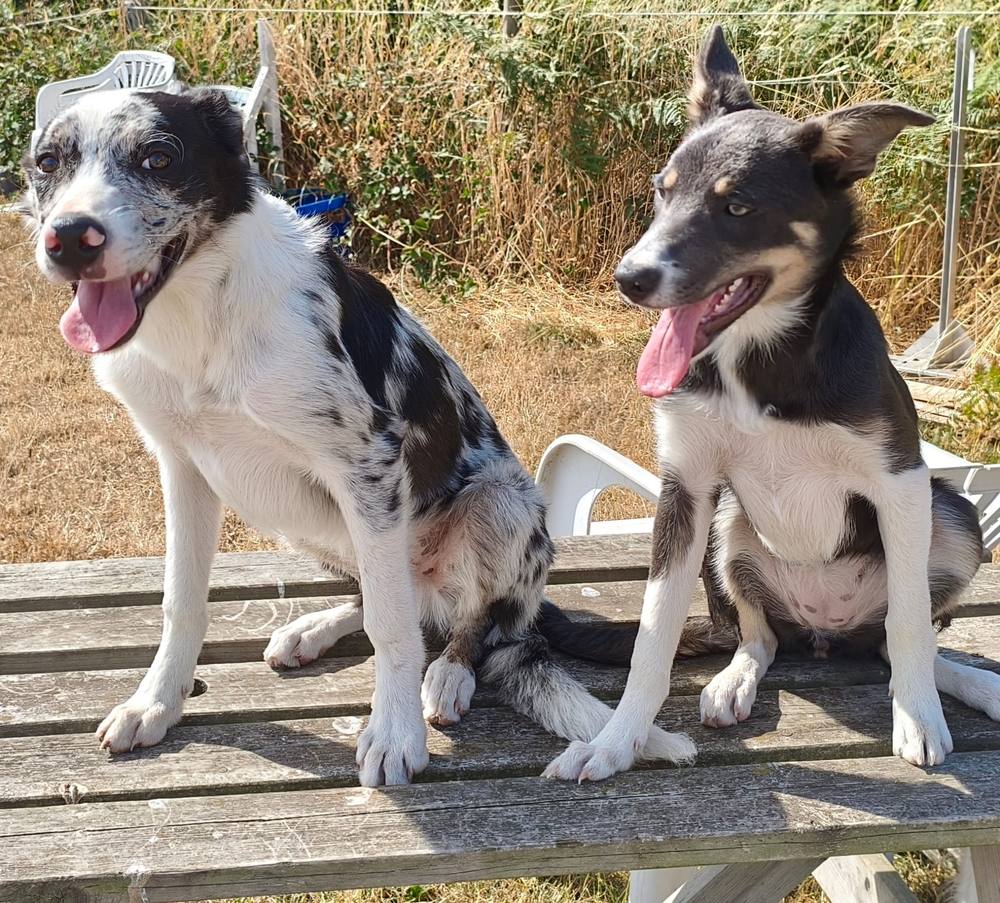
I'm not saying that a happy Border Collie needs training every day, 4-hour walks and stimulation games every evening before bed.
Certainly not. Physical exercise is not the complete answer. Collies, like most working breeds, can take as much exercise as you give them — but give them 10 minutes of mental stimulation a day doing their natural traits, and they will rest happily and be satisfied.
Games and tasks to teach at home
So let's look at tasks and games you can teach your collie at home which will feed his desire to learn, fulfil his natural instincts to control, and give him the owner–dog bond fed by reward and trust.
Starting with the more elaborate and finishing with indoor house games:
Herding balls. These can be bought online and are generally inflatable balls around 55cm diameter with a tough outer covering. They are designed for dogs to push around, move and chase. Very much like Treibball. The collie can "herd" the ball around the garden and control the movement by turning and pushing the ball along. As the ball rolls, the collie can change direction and move the ball in the other direction, as if herding. The ball should be big enough so that the dog cannot bite it, so usually around the same height as your dog's withers or larger is ideal.
Garden agility. Sets of cones and poles can be bought, and you can teach your collie to jump and turn for reward. The desire to learn, act and get rewarded is fulfilled, and you can keep your dog fit at the same time.
Enrichment parks. There are many secure enrichment parks now for dogs, and these can be rented by the hour or half hour. Some have sandpits, large tyres, jumps and things for the dogs to climb safely on and investigate.
Rounding up the balls. If your collie likes to retrieve balls, rather than repeatedly throwing a single ball, have several around the garden and kick and gently throw them in different directions. Your collie will love rounding up the balls and following the constantly changing movement of the balls.
Pools, hosepipes and sprinklers. Being able to control the flow of water can be an excellent way for the collie to use his herding traits. Whether chasing the hosepipe or chasing the water as it dances around in the air squirted from garden sprinklers — it can be very fulfilling.
Tuggy toys. Chasing tuggy toys and the act of tugging is a good energy release, and is a great interactive way of playing with your collie rather than letting him play alone.
Intelligence games. These can be bought online and, although less energetic than some other games, they allow the collie to use his brain in working things out for reward.
Trick training. There are many books on trick training, but use your imagination. Teach your collie to weave between your legs, walk backwards on cue, or give alternate paws on cue. Collies love to learn, so keep changing the tasks and making them harder. Check out videos online for lots of ideas.
Nose bump games. This is a simple but highly effective game that is free, and can be used in so many ways — from a way to get a night-time treat before bed, to recalling easily when out on a walk. Collies love to initiate movement, so teach them to nose bump your hand for a reward. Then develop this into nose bumping objects on cue, such as cardboard boxes or target sticks. In a way, this feeds the desire to grip — this is when the working Border Collie will nip at the heels of larger stock in order to move them along. Simply hold both hands out in front of you at your dog's eye level. Have one palm open facing your dog and one in a fist holding a treat. Don't move your hands, but encourage your dog to sniff your open hand. As soon as his nose touches it, open the fist and drop the treat on the floor. He will soon learn that nose bumping the open hand will release the treats from the closed hand.
If you use your imagination and keep your collie entertained, and his natural desire to herd and control movement satisfied, you will have a delightful partnership where both dog and owner have trust in each other and thrive in each other's company.
Why do these dogs end up in rescue?
Too many Border Collies end up in rescue centres through bad decisions from their owners and lack of knowledge, planning and understanding before purchasing.
Do your research — can you offer the Border Collie everything he needs? If not, don't get one!
Border Collies can be the most amazing, exciting and fulfilling breed to live and work alongside. They are not the easiest breed to get along with, but with planning and understanding they can live their life to the full and be the best companion a dog owner could wish for.
— Kate
About the author
Kate Clapperton is the founder of Rippletrix Border Collies in Sheffield. Kate is a Kennel Club Assured Breeder and Veterinary Physiotherapist producing dual KC and ISDS-registered working Border Collies alongside show-line KC-registered Border Collies. Rippletrix is built on three foundation lines Kate spent years researching and combining. Every pup is fully health tested to the recognised breed panel, BVA eye tested and BAER tested before leaving the yard. Every bitch is spayed after a single litter as breeder policy.
Pieces along the same line
Isn't it funny how owners resemble their dogs?
Kate Clapperton has heard it a hundred times — 'those collie types are mental, aren't they?' — and has started to wonder whether decades spent living alongside Border Collies have merged handler and dog into one routine-obsessed species.
Read the piece →The health and lifestyle of my own dogs
Kate Clapperton lives alongside a pack of Border Collies, some retired, some still working, and credits a shared need for routine as much as any bond of affection.
Read the piece →Want more like this in your inbox?
The GenoVaq journal publishes long-form pieces for breeders and buyers — welfare, health-testing, breeding decisions, marketplace mechanics. New writing every week or two.