How to read a canine semen sample
Motility, morphology, concentration, colour — the four things a fertility analyser reports back on every ejaculate, and what each one tells you about your stud dog.
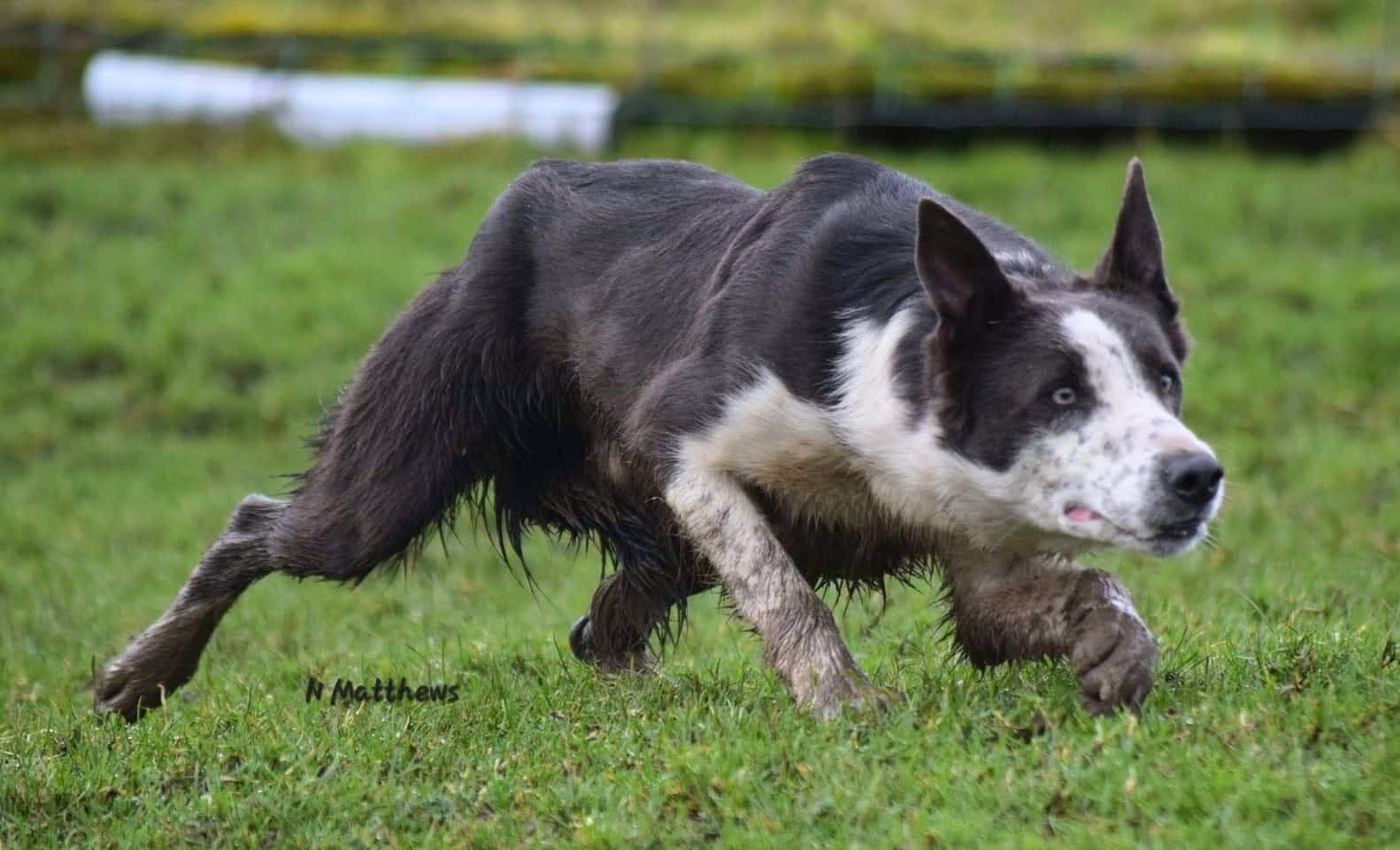
There are many factors which can affect your chosen stud dog's ability to perform and to successfully mate and fertilise the female. As well as external factors — obesity, genetic disorders, stress levels, environmental distractions and the readiness of the female — it is important to make sure that the quality of the sperm he produces is of top quality.
By having his semen tested you can be sure that he is able to produce healthy, virile sperm which will give the best chance of fertilising the female's eggs. Regular testing also monitors his fertility throughout his breeding career and picks up health problems before they become obvious.
How the collection works
Your dog is allowed to relax and help is given to him to produce the sample. Some males prefer a female dog in heat to be in the vicinity, whereas some are more than happy to oblige. Some dogs like to use my "stooge" female dog.
The sample is taken from your dog and collected in a sterile pouch. The 2nd fraction of the semen — the sperm-rich fraction — is prepared and placed into the fertility analyser. The analyser carries out many functions on the sample and a detailed visual examination is also carried out through the microscope. The results are recorded and printed out for you to take home.
The four things the analyser reports on
Motility
This is possibly the most important factor. Unless the sperm can move around, they will fail to fertilise the eggs.
Under analysis, sperm are classed as immotile, non-progressively motile, and progressively motile. A progressively motile sperm will travel in a straight line and is ideal — these sperm should pass through the microscopic field of vision in two to three seconds. A non-progressively moving sperm will display odd movement such as circling and flipping.
Motility can be affected by periods of no sexual activity or on the first ejaculation after illness. This is why regular testing of the stud dog is recommended.
Concentration
This figure is needed to calculate the total number of sperm.
Concentration × volume = total number of sperm in the ejaculate.
Generally, in a normal healthy dog the total number of sperm is 300 million, or 10 million sperm per pound of body weight.
Morphology
To evaluate the morphology of the sperm, 100 individual sperm are assessed. The head, midpiece and tail are examined.
Malformed sperm may have two heads, bent tails, huge heads, or over-short tails. Only healthy sperm can fertilise the eggs, so by assessing the levels of healthy vs malformed sperm we can indicate the success of a potential mating.
Colour and texture
The second fraction is graded on its colour, from clear (0) to milky (5). Generally, cloudy samples contain sperm — but should always be tested. Some infertile dogs shed fat droplets into their semen, giving the appearance of a cloudy sperm-rich fraction.
Other discolourations include:
- Yellow — urine.
- Brown — old blood.
- Red — fresh blood.
Blood in the semen can be through trauma to the penis, or from prostate disease or STDs.
The three fractions of canine semen
There are three parts to a male dog's semen, and each part plays a role in the fertility process.
First fraction. Once the dog starts to thrust and ejaculate he will start to pass the first fraction. This fluid is clear and runny and comes from the prostate and urethral glands. It is secreted in order to clear out the urethra of urine, bacteria and debris. It is usually less than 5ml.
Second fraction. This fluid is thicker and cloudy white, and originates from the epididymis where the sperm are stored. This is the sperm-rich substance needed to fertilise the female's eggs. It is around 0.5 to 4ml.
Third fraction. After a period of time the dog will ejaculate the third fraction, which is clear and runny and consists of prostate fluid. In a natural mating this fluid is used to propel the sperm into the uterus and to provide nutrients for their journey. The third fraction varies in amount and can be 3 to 80ml.
At this point the dog may "tie" with the female.
When your dog reaches maturity
Most male dogs reach puberty at around 8 months of age. This varies among breed and individual dogs. Even though some dogs may be capable of fertilising a female at this age, most will come into sexual maturity between 18 to 30 months. This is when they will have achieved their maximum fertility regarding sperm count. Many dogs would be capable of breeding every two to five days, as their daily sperm output recovers so fast.
Why to test a stud dog before a mating
Six reasons I give every stud owner who asks:
- The test is done with minimum stress to the dog.
- Results are provided in five to ten minutes.
- You can be sure about the quality of the sperm for either natural or AI mating — and so avoid failed conception.
- Regular testing monitors his fertility throughout his breeding career.
- The test can be used for health screening of the dog's fertility system.
- If the semen is to be chilled for long or short storage, its quality can be tested before and after the chilling process to ensure its suitability for AI.
For a buyer paying a stud fee, the difference between a sire who has been fertility-tested recently and one who hasn't is the difference between paying for a service and paying for a promise. Ask.
About the author
Kate Clapperton is the founder of Rippletrix Border Collies in Sheffield. Kate is a Kennel Club Assured Breeder, Veterinary Physiotherapist and canine behaviourist. She runs a canine fertility clinic under Muppets Canine Therapy in Sheffield, offering cytology testing, male dog fertility analysis, ultrasound scanning, whelping assistance and microchipping. This piece is adapted from her clinic pages with her permission.
Pieces along the same line
Using ultrasound in a canine pregnancy
Why every breeding bitch benefits from an ultrasound scan — for early diagnosis, viability, gestational dating, monitoring foetal development, and (critically) after the whelping to be sure nothing has been retained.
Read the piece →When to mate: the four stages of a bitch's season
Proestrus, estrus, diestrus, anestrus — and the split season that misleads a lot of breeders.
Read the piece →Want more like this in your inbox?
The GenoVaq journal publishes long-form pieces for breeders and buyers — welfare, health-testing, breeding decisions, marketplace mechanics. New writing every week or two.